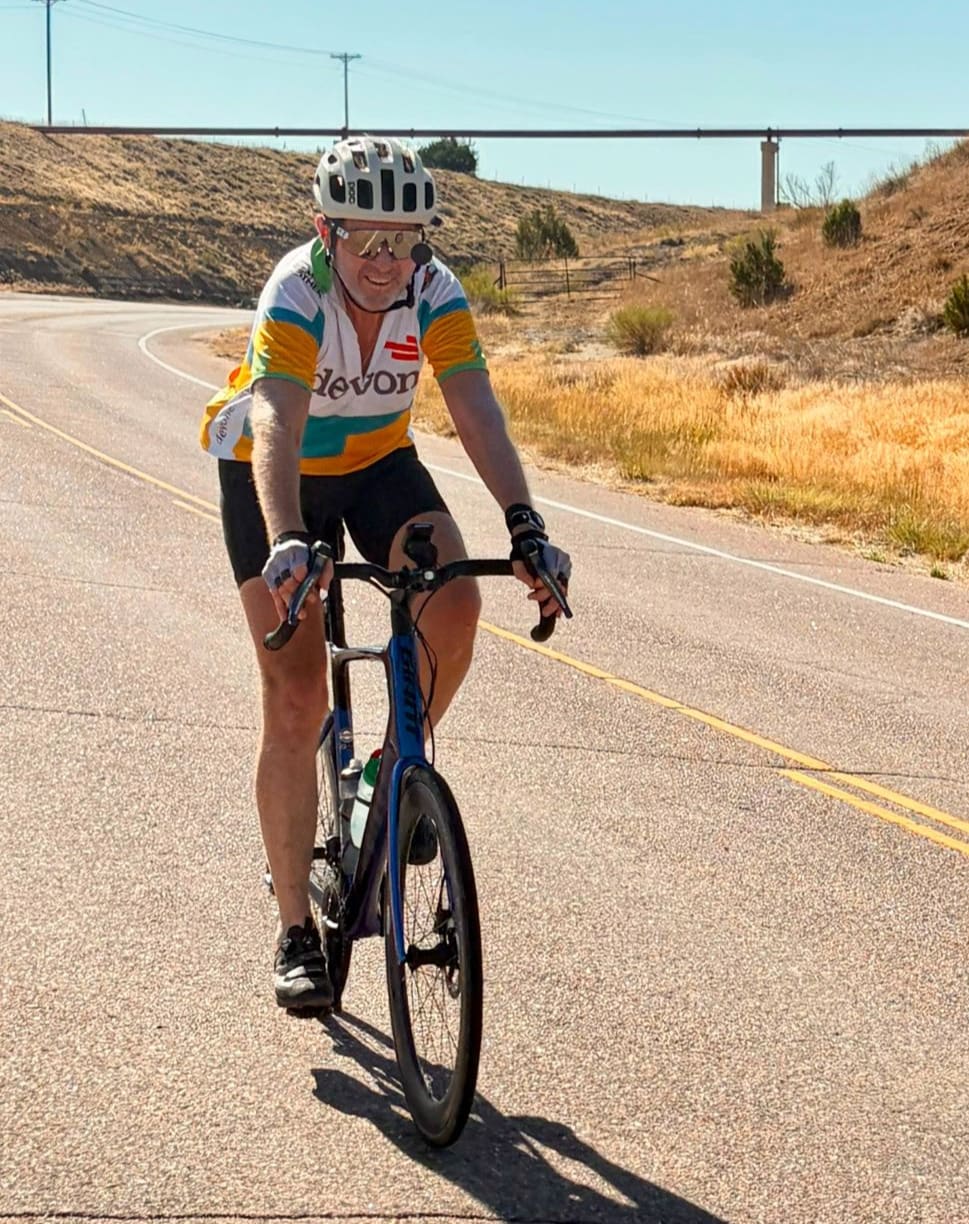
By Chip Minty – TransAmerica 2026 Cyclist
I was a teenager when I caught the virus. I was somewhere in the western Ozarks, riding my first Oklahoma Bicycle Society Grand Tour in 1978. That was my first experience of biking from one town to the next and my first taste of the freedom that comes from traversing an entire region under your own power. I heard someone talk about Bikecentinnial, a coast-to-coast bike route established in 1976, and I was forever enamored with the idea.
The years passed and I continued riding and touring, and somewhere in there, Bicentennial was renamed the TransAmerica Bicycle Trail. But life got in the way of my dream. First college, then career, marriage and children. A Multiple Sclerosis diagnosis came along about 20 years ago and all but extinguished any hope of riding across America.
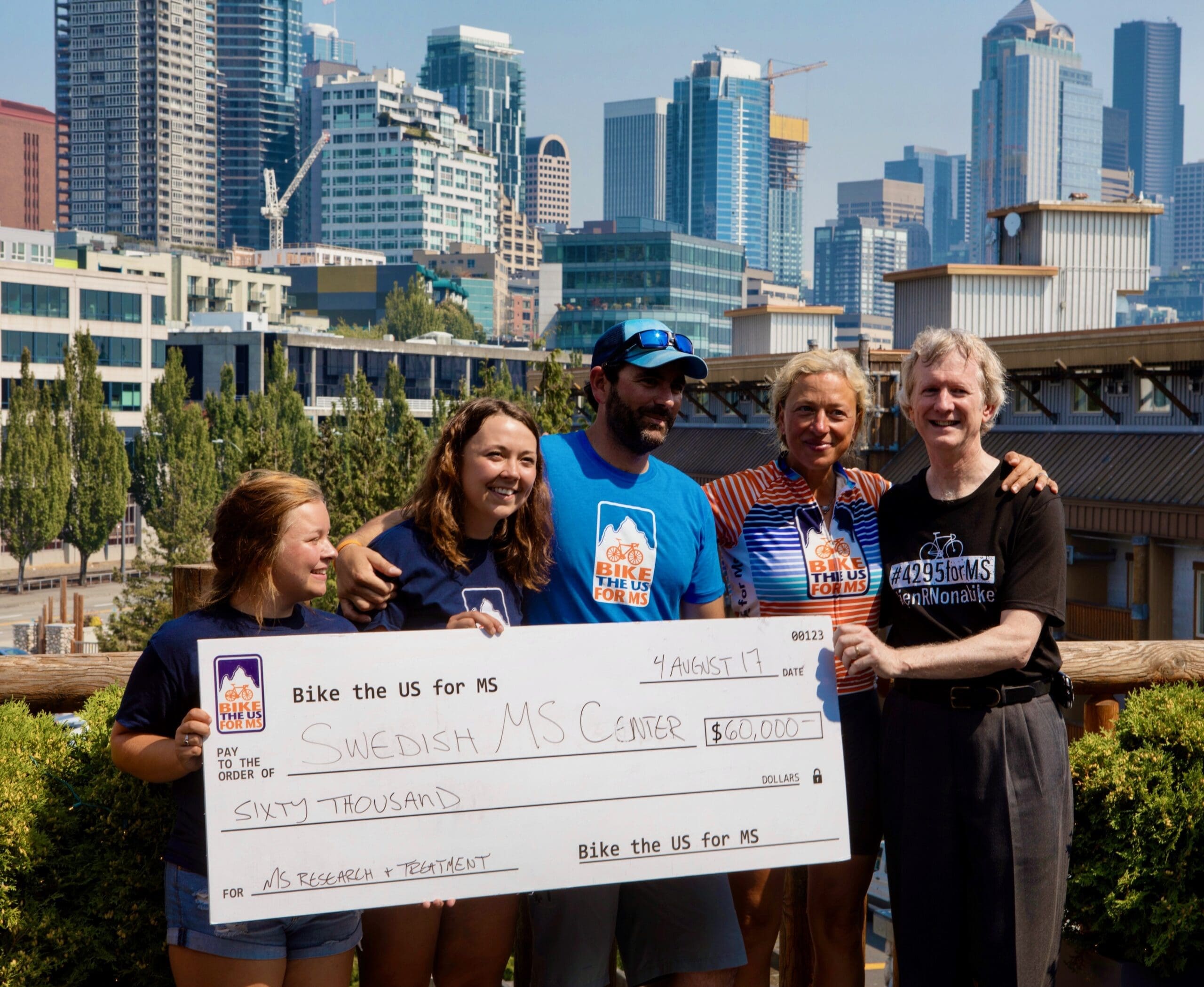
Then, late last year, I discovered Bike the US for MS, a nonprofit that partners with cyclists to raise money for research and patient services in the fight against multiple sclerosis. In exchange for riders raising thousands to fight MS, the organization supports their TransAmerica journeys. Bike the US for MS hauls their gear and arranges for churches, campgrounds or other places to stay. And if riders are having a bad day, there are support vans to pick them up.
Some people think Bike the US for MS is set up for cyclists who have MS, but the fact is, it’s almost unheard of for someone with multiple sclerosis to participate in one of their rides. In my case, I wasn’t thinking about MS when I signed up. I was confident. I’ve experienced fare-ups from MS over the years, but none have caused lasting debilitation, and for more than a dozen years, my body had settled down with no new symptoms. So, I joined the team of 30 riders slated for this year’s ride across the TransAmerica Trail’s Western Express Route.
We left Yorktown Va., on June 14 and arrived in San Francisco on Aug. 17. The crossing covered 3,785 miles and nine states. Prior to our departure, I raised $20,150 from family, friends and even friends of friends, contributing to a team total of more than $440,000, an all-time record for the organization.
Hardest Ride
June 14
In the flurry of history surrounding our nation’s long fight for independence, it might be easy to overlook what happened in Yorktown, Va. in 1781.
George Washington’s siege of the British army at Yorktown effectively ended the Revolutionary War. And you could argue that America drew its first breath of freedom as an independent nation in Yorktown.
You can just imagine the excitement and uncertainty our forefathers must have felt in the aftermath of that victory. So, it’s fitting that the TransAmerica Bicycle Trail was established with Yorktown as its Atlantic endpoint, marking America’s 200th anniversary in 1976.
Fifty years later, we dipped our tires in the ocean on Yorktown Beach, and began our own American journey, completing the first 62 miles of our 3,785-mile journey. It’s good to finally be on the road.
It was a tough day today, with heat and humidity that even surprised the locals, but we all made it to our first destination, a tiny Methodist church in the countryside of New Kent County, Va., where we are sleeping tonight. A cold front is moving in as I write, so tomorrow’s 80+ mile ride will be much easier.
The climbing begins on Tuesday, when we ascend into the Blue Ridge Mountains.
June 21
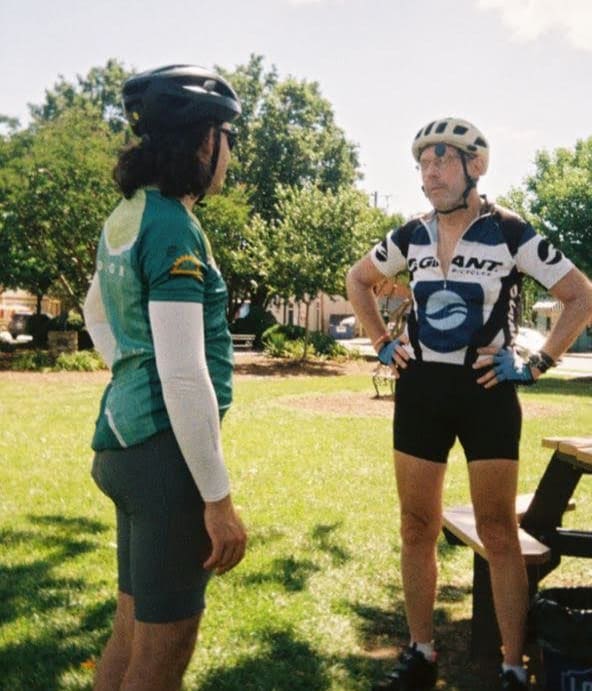
Before we started our cross-country journey last Sunday, they said, “If we could make it to Blacksburg, Va., we had what it takes to reach San Francisco.” They said the rest of the trip would be easy in comparison. At the time, I thought that was crazy, considering everything that comes after Virginia. What about the Missouri Ozarks and the Colorado Rockies? What if the wind kicks up in Kansas, and what about all the desolation in Utah and Nevada? They have “The Loneliest Road in America” out there, and we’ll be riding on it for a long time.
But this week has changed me. After finally arriving in Blacksburg this afternoon, I’m not laughing anymore. I’m taking ibuprofen, and thankful that I’ll probably never have to take on the Blue Ridge Parkway again. I toured the Blue Ridge Mountains when I was in college and they tested me then, and this trip reminded me of all the grievances I had as a 22-year-old. It seemed like we could never get rolling under the mountainous regime of steep grades and incessant undulation. When you’re among them, they make you fight for every single mile.
And on this trip, I experienced Vesuvius Hill, leading down from the Blue Ridge Parkway. It’s got to be the scariest and most dangerous descent on the TransAmerica Trail. The hill is about four miles long and drops 1,700 feet over a narrow, curvy and rough road. One of our team members lost control of his hydraulic brakes halfway down and had to crash into a ditch just to stop his bike. The good news is he didn’t break his neck; the bad news is he’s flying home to Houston this weekend with a broken arm.
All of that aside, the Appalachians look beautiful from a bicycle. We have ridden endless miles on shade-speckled roads shrouded by hundred-year-old trees. We’ve ridden aside mountains, tall woodlands, vine-covered slopes and lush green landscapes overflowing with life.
Mountain critters, small and large, have jumped into the roadway with blatant regularity, and rivers flowed with beauty that is so common in this part of the country that their serenity has most certainly been taken for granted.
So, after riding into Blacksburg this afternoon, I’m wondering if making it here really means San Francisco is a done deal.
From an ability perspective, maybe it is. This has been a very hard week, filled with more than 360 miles of riding and nearly 18,000 feet of vertical gain. No other week will be as demanding as this one. But that doesn’t mean the Ozarks, the Rockies and the desert west won’t be hard.
But maybe this week does prove we can actually do this.
Tomorrow, we will be off our bikes to rest and do service projects for MS patients in the Blacksburg area and on Sunday, we will continue west. By midweek, we will be in Kentucky.
July 7
Apparently, iPhones these days are equipped with a security feature that can actually sense when they might have been stolen.
I learned about that on June 20 in Blacksburg, when my iPhone stopped working. I guess the rough and tumble of life on the TransAmerica Trail just got to be too much. It must not have appreciated being dropped multiple times and enduring hundreds of miles of vibration on my handlebars. Instead of its former cushy life sitting on my desk in Norman, it was living the life of a vagabond, moving from town to town, staying at campgrounds, and in unfamiliar churches and bike hostiles.
Distraught over all the change, it must have concluded that someone other than me had carried it off, so it shut down and demanded my username and password. The problem was, I had not memorized the latest iteration of my Apple password, and my list of passwords was beyond reach, locked inside my dead iPhone.
For those who have been wondering where I’ve been since my last post, my cross-country adventure has been quite a ride so far. After more than two weeks, I have finally resolved the iPhone issue, and that’s good because there’s much to talk about.
I’ve actually been off my bike since June 24 to heal an injury. Our team doctor told me to stop riding because of a saddle sore that deteriorated into an open wound. Considering my iPhone was already dead with no hope of revival from the road, and the injury, I decided to leave the group, rent a car and drive home to heal and fix my phone.
So now that I’m almost fully healed and have an iPhone that works again, I’m rejoining the group on Friday in Pittsburg, Kan.
I’m disappointed that I’ve missed out on Kentucky and Missouri, but in journeys like this, I guess there’s plenty of potential for mishaps and bad luck. Meanwhile, I’m grateful for what I’ve accomplished so far.
Virginia turned out to be a great challenge with 500 miles and thousands of feet of vertical gain in 10 days of riding.
Before we started, they told us we would see more elevation gain in Virginia than we would see in any other state, and they weren’t kidding. Elevation gain can be hard to keep track of on a bike, but it was somewhere between 30,000 and 40,000 feet.
I can’t wait to start riding again on Saturday and to continue the journey through Kansas, Colorado and the West. And now that my phone is back up and running, I’m looking forward to sharing the experience with all of you again.
July 11
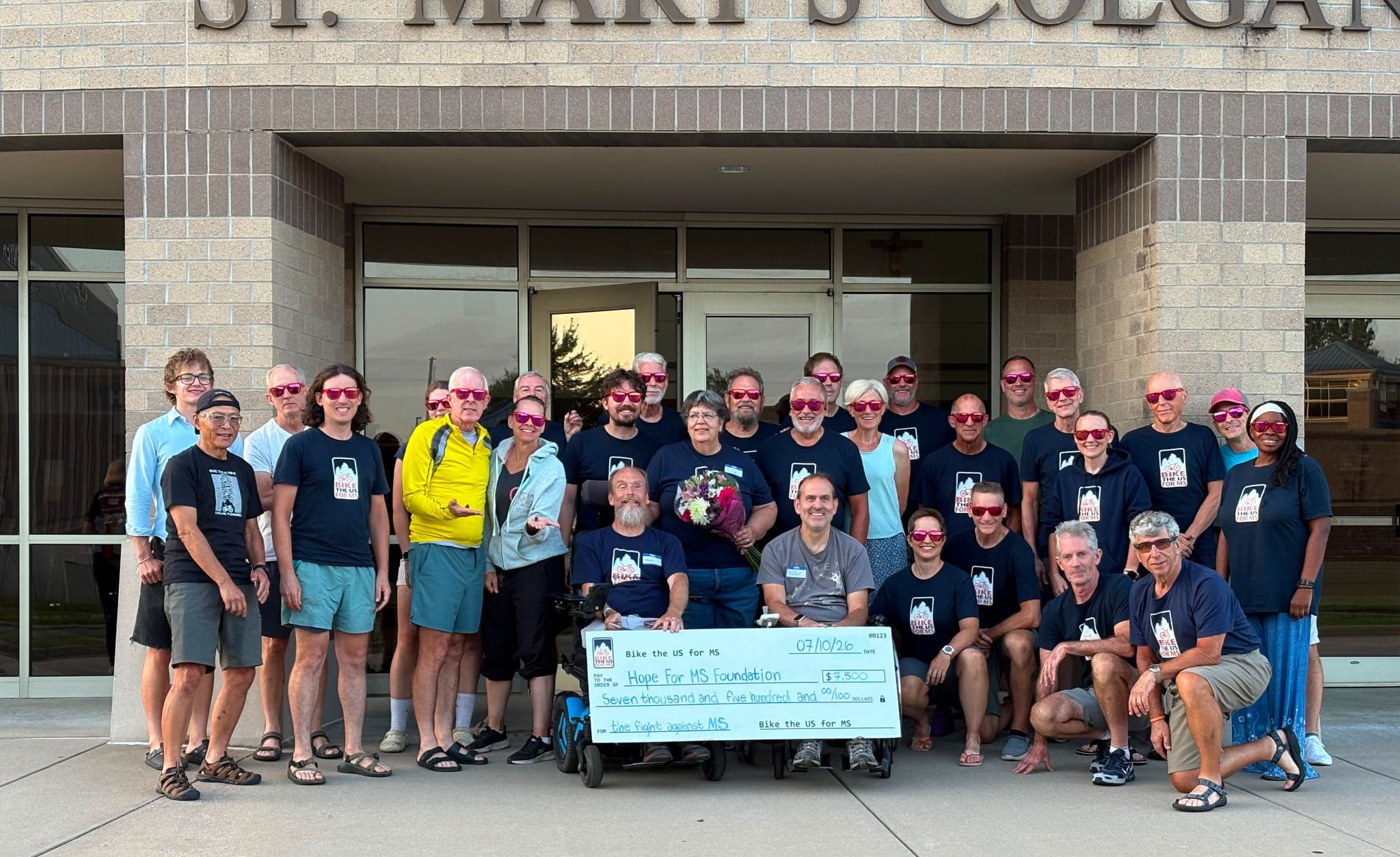
Just a quick note about rejoining my Bike the US for MS family yesterday and riding today from Pittsburg to Chanute, a 60-mile trip west that took less than four hours to complete. Flat with a tailwind, the miles melted away like butter.
We’re no longer in the mountainous East, where the terrain seemed to contest every mile. Now, instead of crawling through the hills, we’re clicking across the Kansas plains, finishing by noon with energy to spare. I’m so glad to be with an amazing group of strong, determined cyclists who welcomed me back yesterday. They told me about all I had missed.
The team talked about the wild Kentucky dogs, the flooded roads, drenched campgrounds, and the torturous heatwave. They told stories about the confounding Ozark Mountains with steep grades and unrelenting hills. They said I left for home at just the right time, and that I was coming back right when things were starting to get fun.
I don’t know about that. Leaving the group was not my vision for this adventure, but that’s now in the past. I’m grateful for the opportunity to complete the journey with a special group of riders who are doing something so crazy that most people we talk to just look at us and shake their heads.
Our journey continues tomorrow with a 63-mile ride to Eureka. I will keep you posted.
July 13
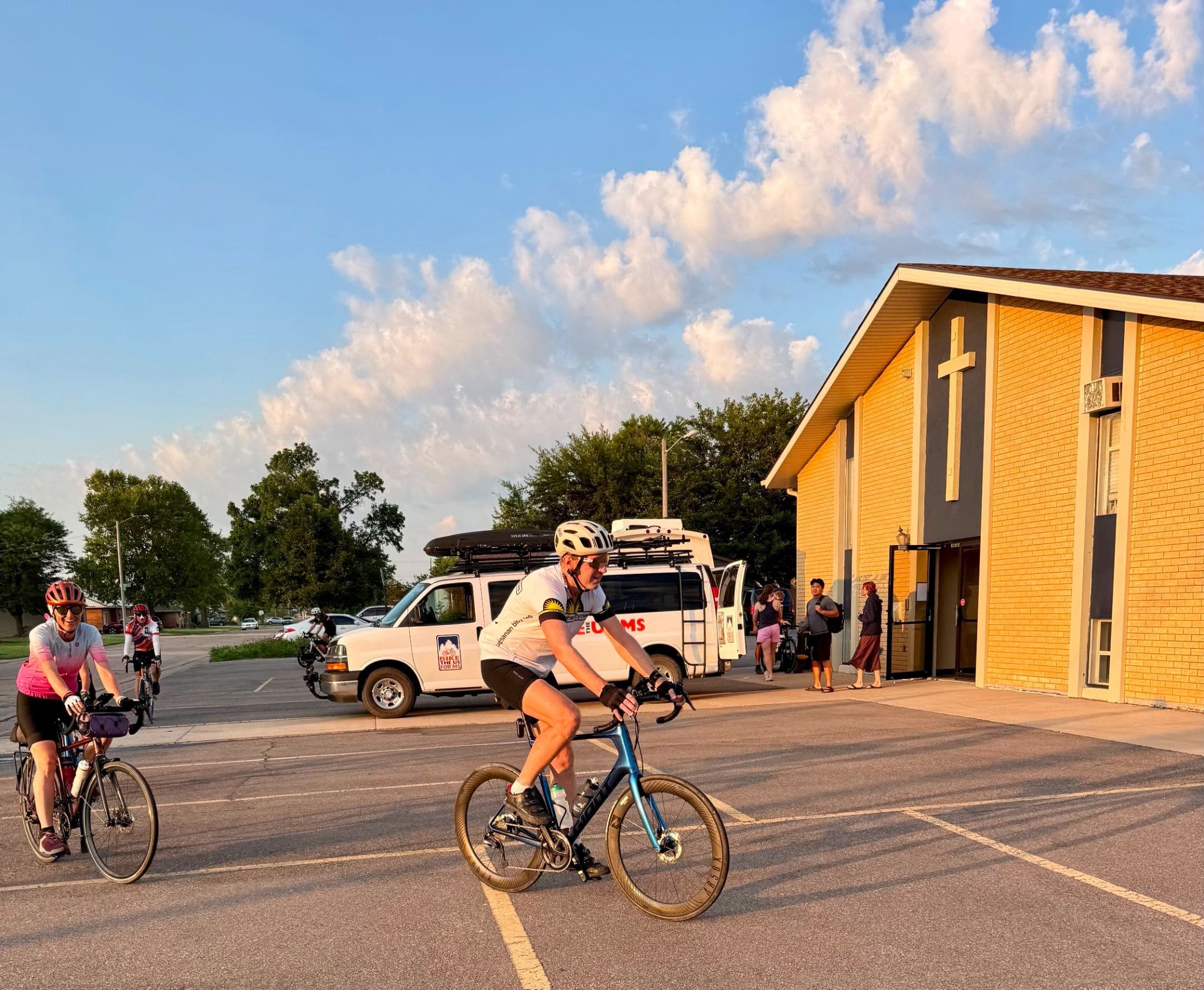
We just completed day-three of our race across Kansas, completing a 76-mile ride to Newton. Tomorrow we’ll ride 104 miles to Great Bend. Next, we will ride 65 miles to Ness City and then to Tribune, a 103-mile trek to the doorstep of Colorado.
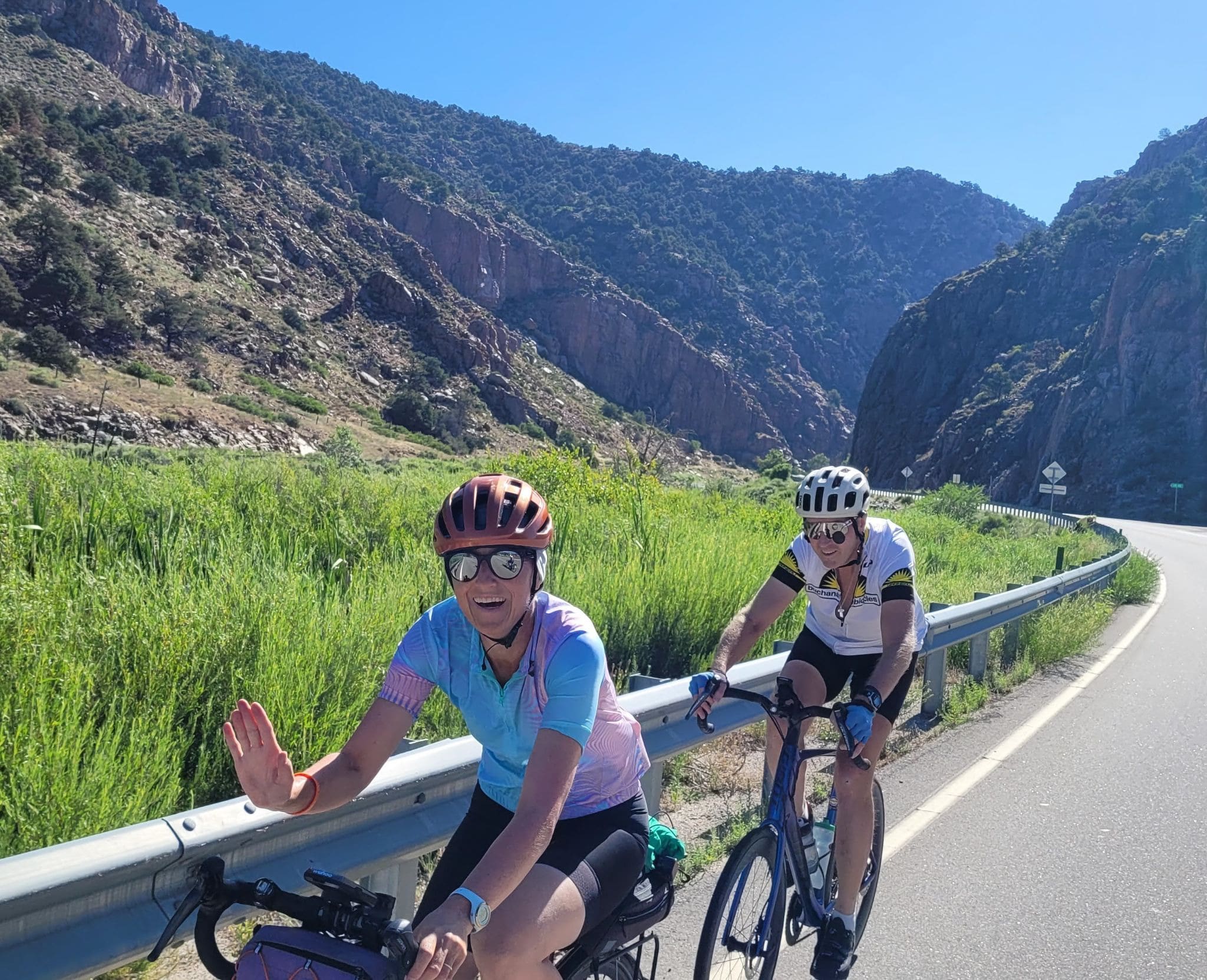
We all have our personal riding styles. Some go it alone, others ride with long-time friends and several on our team float, joining with whoever they meet along the way.
My strategy was to make this trip through the plains as easy and straightforward as possible by drafting and sharing the load.
But riding in a pace line is not everyone’s idea of fun. Some think it’s stressful and even dangerous to ride within a foot or two from another person’s back wheel. But those who can draft will reduce wind resistance by as much as 30% and ride farther faster.
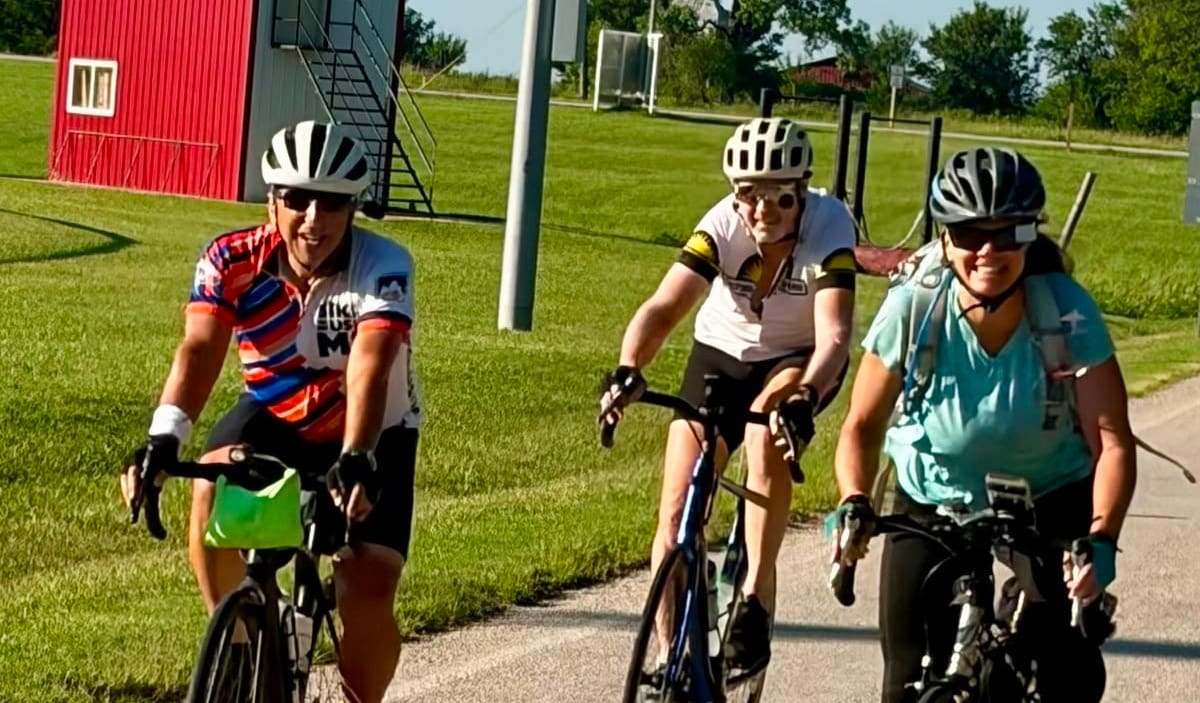
Fortunately for me, I met Lana and Andrea, both with lifelong dreams of riding across America. Lana, from outside of Baltimore, and Andrea, who is from England, are wives, mothers, and not exactly the competitive types, at least on bicycles. So, clipping across the plains in tight formation may not have been what they had in mind for this ride.
But somehow, they were willing to listen to my plan, and we’ve been motoring across the Kansas plains ever since, rotating time at the front to block the wind, making the riding easier for those in the back.
Together, we’ve made our days in the saddle shorter, we’ve saved energy, reduced time in the sun and we’re enjoying the miles. But, in a week, we’ll be in the Rockies, where there will be challenges that pace lines can’t solve.
July 14
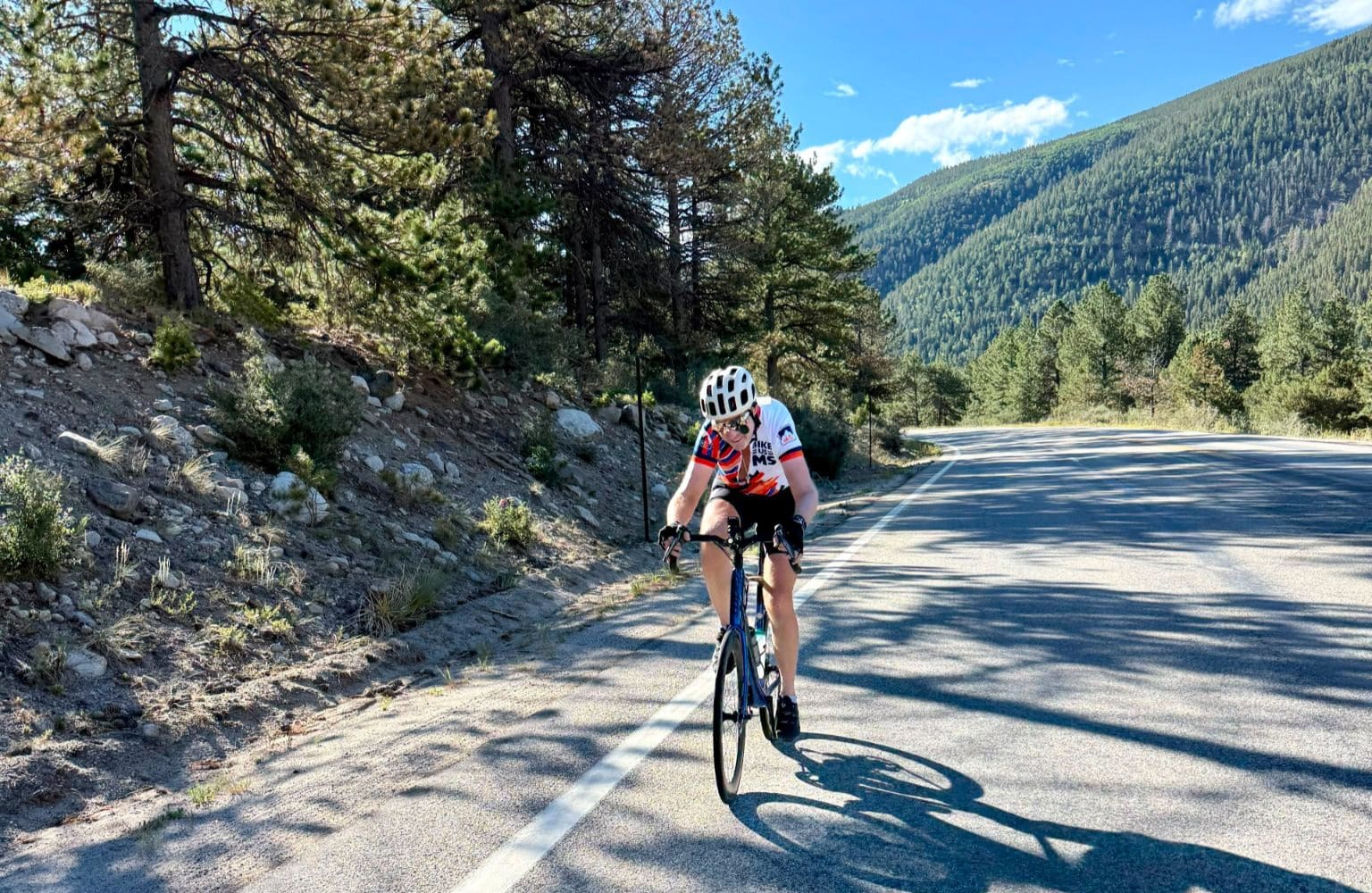
Today, we zero in on completing our race across Kansas with a final 103-mile marathon to Tribune. We’ll ride the distance on State Highway 96, a two-lane with a narrow shoulder that seems to be the preferred route for cattle trucks. You know the kind. They pass you at 65 mph with a whoosh of wind, leaving an acrid aroma in their wake.
It’s been interesting to observe the changing scenery as we’ve moved west. The lush farmland, prairies and forests that dominate the East are all behind us, and we’re now in the high plains, where big skies and drought are part of the environment. The humidity is lower in western Kansas, but the sun is just as intense, so we’re trying to be efficient with our time to finish rides as early as possible to limit exposure to the heat and the rays.
We have accumulated an interesting crowd on this journey, which includes a good mix of riders from Europe. You’ve already read about Andrea, the English mother of three who lives and rides in the cycling mecca of Great Britain but learned how to draft in Kansas.
Then we have Caroline, an anesthesiologist from Germany, who practices medicine part-time while pursuing international adventures. After she finishes riding the TransAmerica Trail with us, she’ll load up her bike with packs and ride solo east to Florida via a cross-country route along our southern border and the Gulf shore. Several years ago, she rode across the U.S. via the northern route, starting in Maine and finishing in Washington. Last year, Caroline soloed on her bike 5,000 miles across Australia and before that, she climbed to the base camp of Mount Everest, where she witnessed a rescue helicopter crash and then sprang into action to save the severely injured pilot. And the list of other adventures goes on.
Bike the US for MS ride leader Charlotte is a recent college graduate from England, volunteering to spend the summer with us before returning home to start her career.
And we recently adopted Jane, from Scotland. She was touring the TransAmerica Trail solo until we met up with her in central Kansas and invited her to ride with us until our routes diverge in Pueblo, Colo.
We meet a lot of riders who’re going it alone. Jamison, from Massachusetts, is another solo rider we’ve adopted. Once we reach Pueblo, he too will head north, through the Rockies, into Wyoming and west to finish his journey in Astoria on Oregon’s Pacific Coast. Jamison and Jane are both taking the original TransAmerica Trail. It’s about 500 miles longer than our Western Express route, but it avoids the deserts and desolation of Utah and Nevada.
In a couple of days, we will be approaching the foothills, and reports tell us that Rocky Mountain wildfires are active in areas where we’ll be riding.
July 19
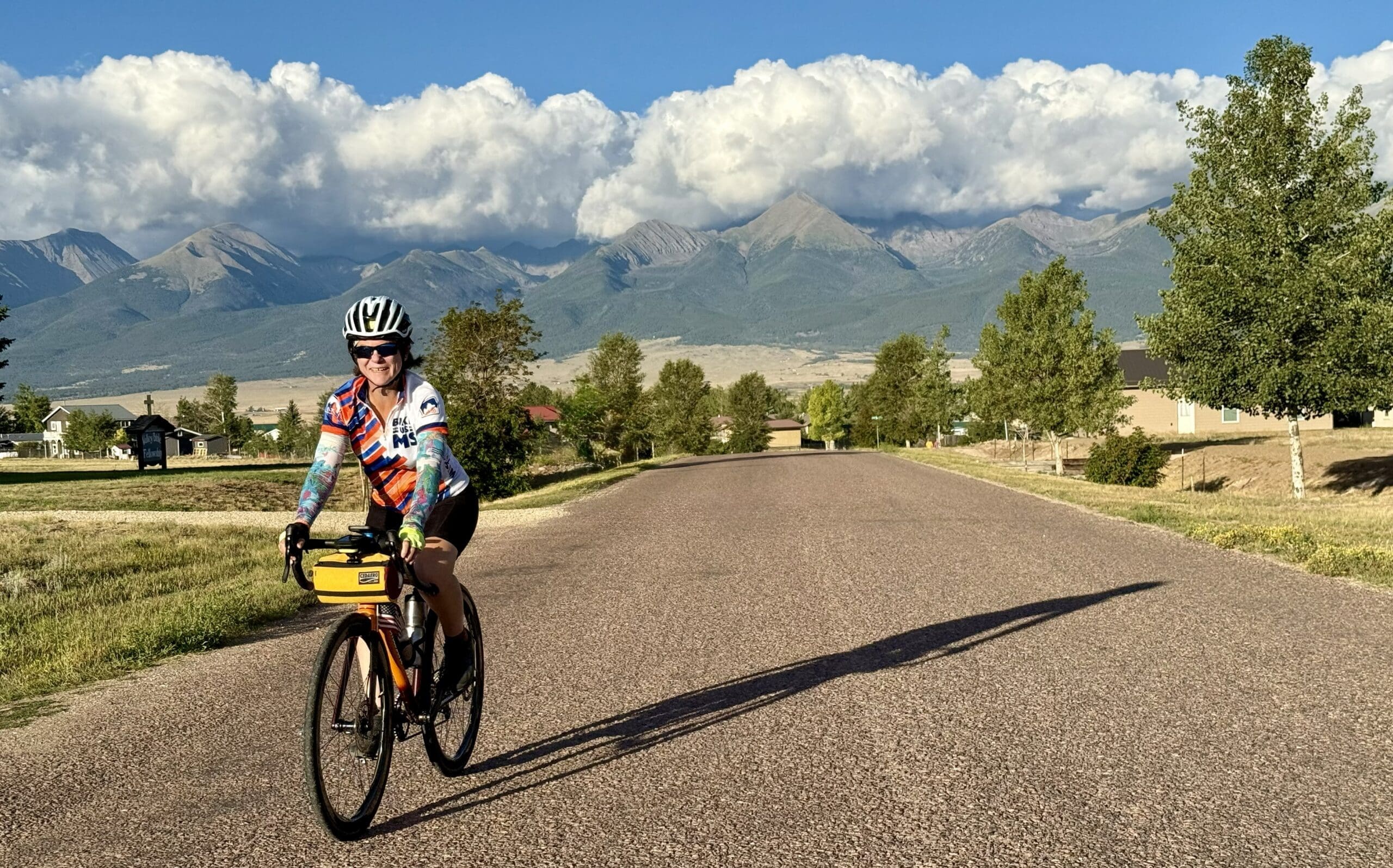
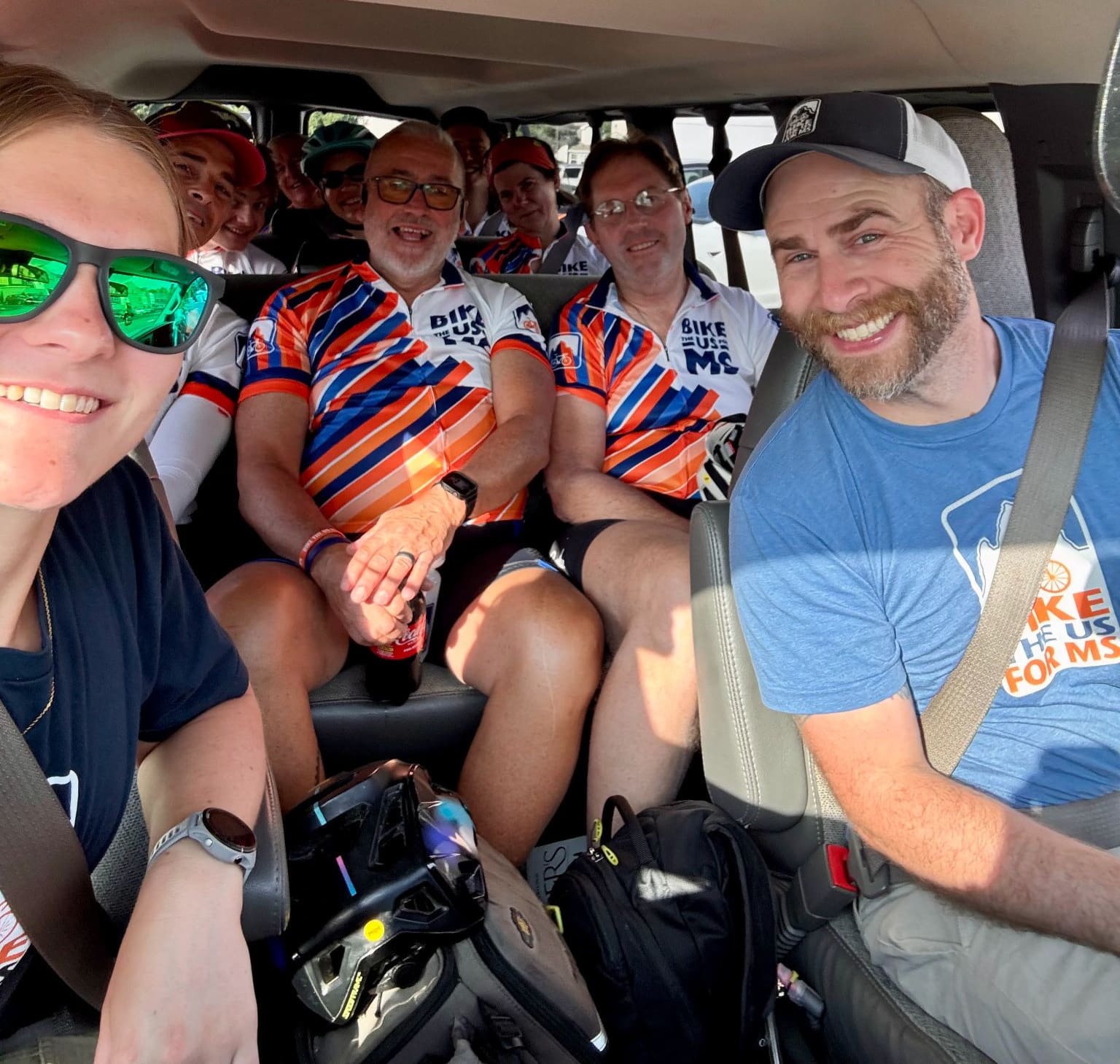
Today, we will complete our journey to the Rocky Mountains. Within an hour or two of riding out of Ordway, Colo., we’ll get our first glimpse of Pikes Peak, and when we finish our 54-mile ride into Pueblo this afternoon, we’ll see the front range outlined against the blue sky in all its splendor.
The sight will be among so many of the rewards that come along the trail.
But my perspective has changed since we left Yorktown a little more than a month ago.
Most of us had never ridden across America before and we really had no idea what would be ahead. Our objective was to ride every mile, dip our front wheels in the Pacific and add another conquest to our list of cycling accomplishments.
But flood waters washed away that goal for all of us before we even got out of Kentucky, and we are learning as we go just how rugged, vast and unrelenting America can be for people trying to cross her on something as feeble as a bike.
In actuality, the trail is not something for us to conquer, and completing the journey is not a feat. Riding the trail is an experience and what we walk away with has nothing to do with the miles we rode. The trail is opening us to people and perspectives we never would have experienced otherwise. And the country seems different when we’re on the trail. You not only see America, but you hear it, smell it, taste it and feel it.
We ride on lonely roads, and crowded highways as we pass through bustling cities and empty ghost towns. We wonder how much the trail has changed since it was established in 1976, and we think about how different our country has become.
Through it all, we’re experiencing joys, victories and fulfillment along with hardships, frustrations and fears that we wouldn’t even notice in our modern world of jet aircraft and superhighways.
A few days ago in Kansas, we stopped briefly to celebrate reaching the halfway point of our journey across America. Today, we’ll finally reach the high country. I can’t wait to find out what we learn up there.
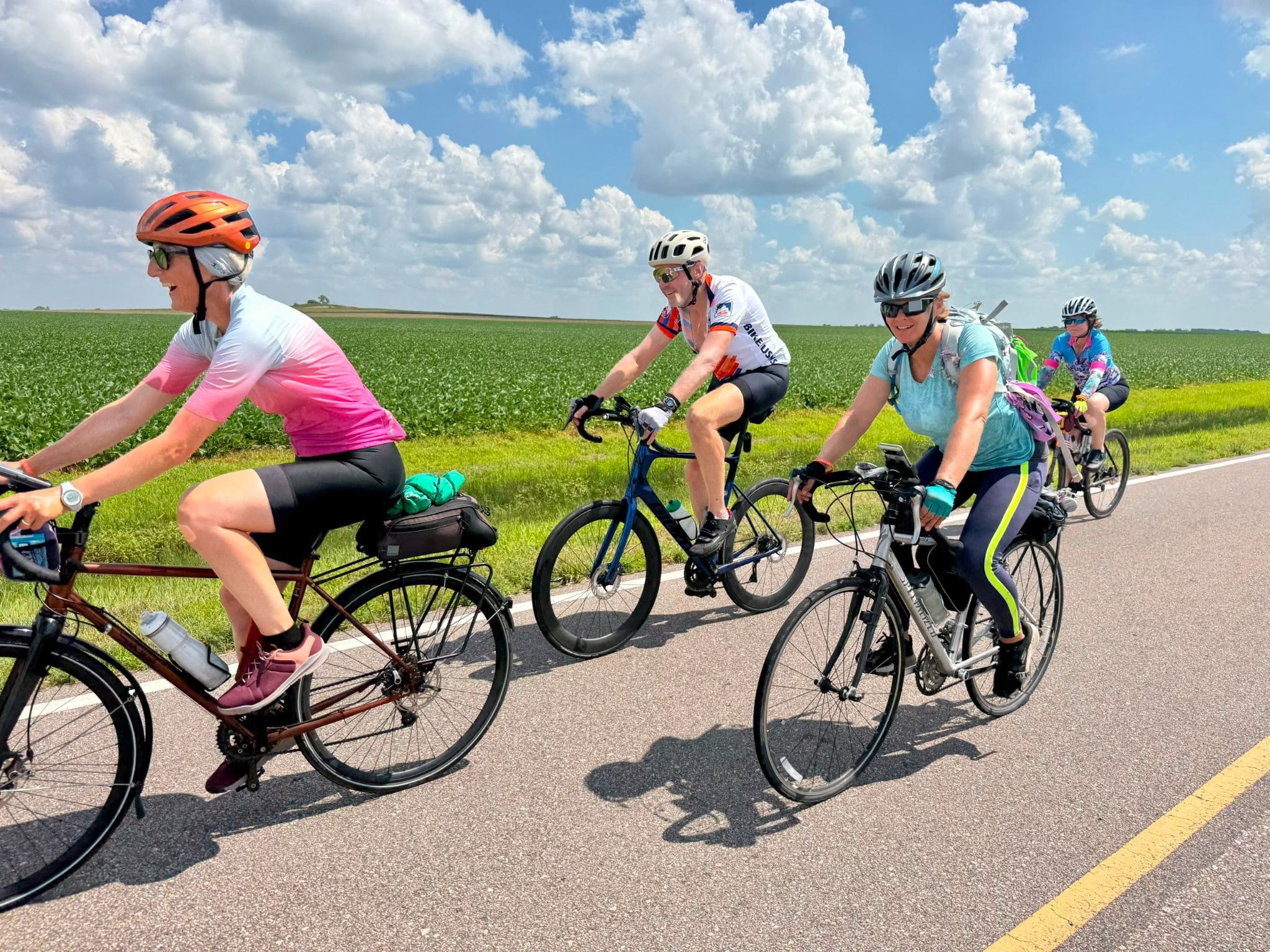
July 22
Some mountain passes in Colorado have names and some don’t, but we learned on Tuesday that names aren’t necessarily an indicator of how challenging a climb can be. Names like Red Mountain, Independence, Lizard Head, Wolf Creek and Berthoud are famous and sometimes infamous.
We left Pueblo yesterday for a 53-mile ride up to what we didn’t even realize was a pass. Turns out, it was a healthy 9,300-foot summit. Amid the stunning beauty of mountain peaks, forests and rock faces, we crawled over grades of up to 8% and discovered the limitations that thousands of feet in elevation can pose on our lungs.
Meanwhile, nearby forest fires forced the closure of surrounding highways, forcing a high volume of truck traffic onto our SH 96 route. Let’s just say the truckers were disappointed in the inconvenience, and seeing a couple dozen bike riders on their detour route did not brighten their day. The county sheriff even stopped us with warnings to look out for trucks and fire equipment.
Through it all, we made it up and over safely, and we enjoyed the reward of a fast 15-mile descent on smooth roads overlooking an amazing view of high peaks silhouetted in the afternoon sun amid a smoky haze from the forest fires. While speeding down the mountain, I could see the Sangre De Cristo wilderness and the vast and colorful Wet Mountain Valley. Coasting at speeds up to 35 mph, I just couldn’t stop to take pictures of all the beauty. I was having too much fun.
Leaving the town of Silver Cliff this morning, we descended another 1,500 feet over a 45-mile ride, ending on the Arkansas River at Salida. Another test is in store tomorrow, when we’ll ride 28 miles to the 11,300-foot summit of Monarch Pass on the Continental Divide. The grade shouldn’t be too steep, but breathing at that elevation may still be hard. Just like on Tuesday, I may have to stop several times on the ride up just to catch my breath.
Once we’re over the top, we’ll practically coast 37 miles into Gunnison, where we’ll stay in dorms at Western Colorado University. Thursday could be a challenging day. I’ll let you know how it turns out.
July 23
We all made it safe today over Monarch Pass and then faced 20 mph headwinds to complete our 65-mile ride to Gunnison. We’re actually sleeping in beds tonight in the dormitory at Western Colorado University. It’ll be nice.
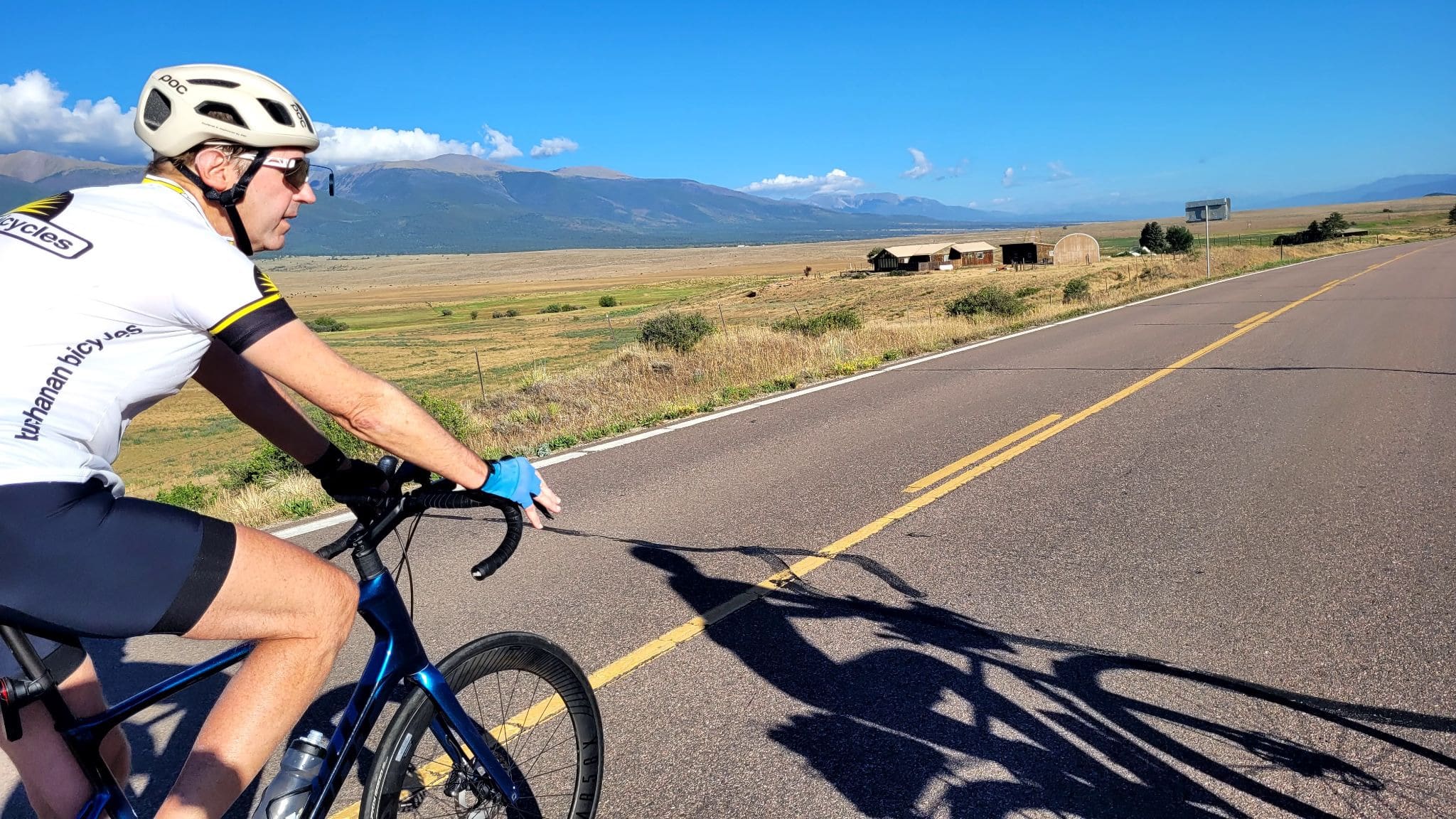
July 26
When I was diagnosed with MS, my doctor advised me to avoid heat and get plenty of rest. Heat and fatigue can be culprits of this disease, prompting impacts to be even more prominent.
So, for the last 20+ years, I’ve shaped my lifestyle around that advice.
I take naps, and in the summer, I go out to ride early, and I go indoors before noon. That way, the worst symptoms hardly ever come around, almost to the point that I forget about them altogether.
But things are different on the TransAmerica Trail. Fatigue is almost constant for everyone as we ride long miles and sleep on different floors almost every night. And extreme summer heat is not easy to avoid. In spite of it all, I’ve been sailing through the days without any signs of symptoms that could stand in the way of my success.
That changed on Thursday as I was climbing a long hill in the heat on US 50 between Gunnison and Montrose. My left arm started going weak and my hand started dropping off to the side of my handlebar. This has happened before, but not for a few years. It was a warning sign that I had overstepped and pushed too hard. Maybe it was Monarch Pass, or that no-name pass that gave me so much trouble out of Pueblo. That strong headwind into Gunnison was no picnic either. It all accumulates and I was exhausted. Everyone was.
But I finished climbing my hill, coasted down a 10-mile descent, then climbed into a support van at the next rest stop, ending my ride at mile 47 of a 66-mile day.
Rest is what I needed, so I skipped the next day’s climb to Telluride on Saturday and the team will have a scheduled day off here today, allowing my body more time to catch up and recover.
Meanwhile, it’s been so nice to have such a wonderful bunch of supportive teammates who have shown so much kindness the past couple days. Even though I’ve experienced this left-arm thing before, it’s always scary and uncertain. I’m feeling stronger now, so tomorrow I’ll set out with the team again to climb Lizard Head Pass and ride 64 miles to Delores, our final stop before reaching the Utah border on Tuesday. After Lizard Head, the hardest climbing of our journey will be over, and our remaining challenge will be the desert heat.
I debated about writing this post. It’s kind of personal and I wasn’t sure if anyone would want to hear me complain about my health problems. But authenticity is important and MS is the whole reason we’re out here, so I hope you don’t mind.
While I’m riding out on Monday, I’ll be proceeding with caution. I’m not sure if this left-arm thing was a one-time deal, or my body really has had enough. It would be disappointing, but more days in the support van could be possible as we close in on the final weeks of our journey.
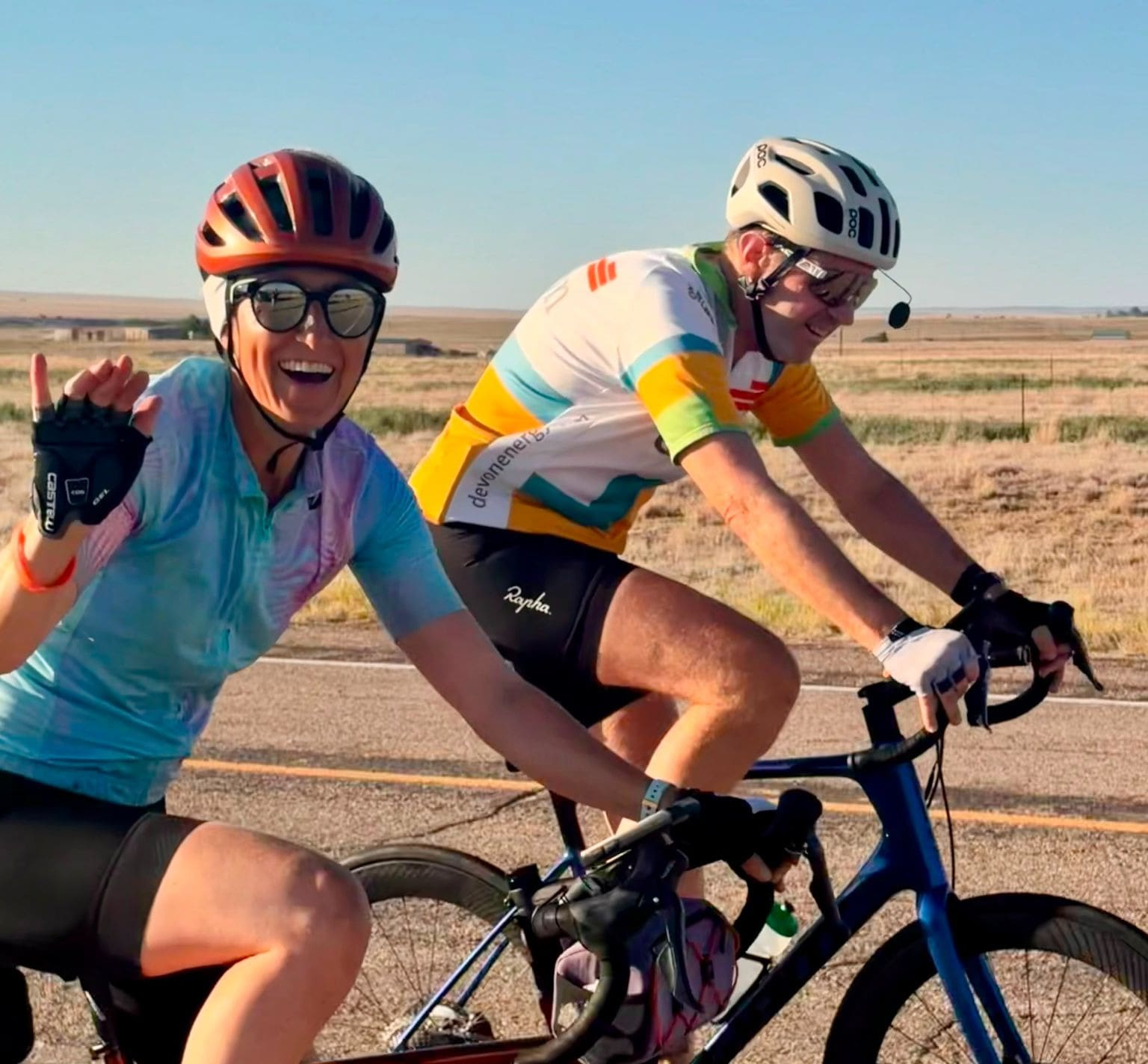
July 27
Researchers and doctors have learned a lot about multiple sclerosis. They have all kinds of new medicines, and they’re even looking for ways to reverse the nerve damage MS leaves in its wake.
I hit a crossroads on the TransAmerica Trail last week when MS imposed itself on my left arm and hand while I climbed a Colorado grade on a hot, sunny U.S. highway.
My left arm and hand lost strength, forcing me to end the day at a rest stop. I don’t know for sure why it happened, what it means or if it will happen again. But I do know that I was breaking several rules pertaining to heat, fatigue and physical stress that all MS patients should observe. The course of my MS journey has been so benign over the past 12 years, I thought those rules might not even apply to me anymore. I guess they still do.
As for my crossroads? Today, my TransAmerica team will continue westward without me because I think what happened with my arm and hand is a warning: If I proceed with my friends into the extreme heat and physical stress of the Utah desert, I could trigger a neurological response that could change the way my body works. That’s a warning I just can’t ignore. It’s just not worth it.
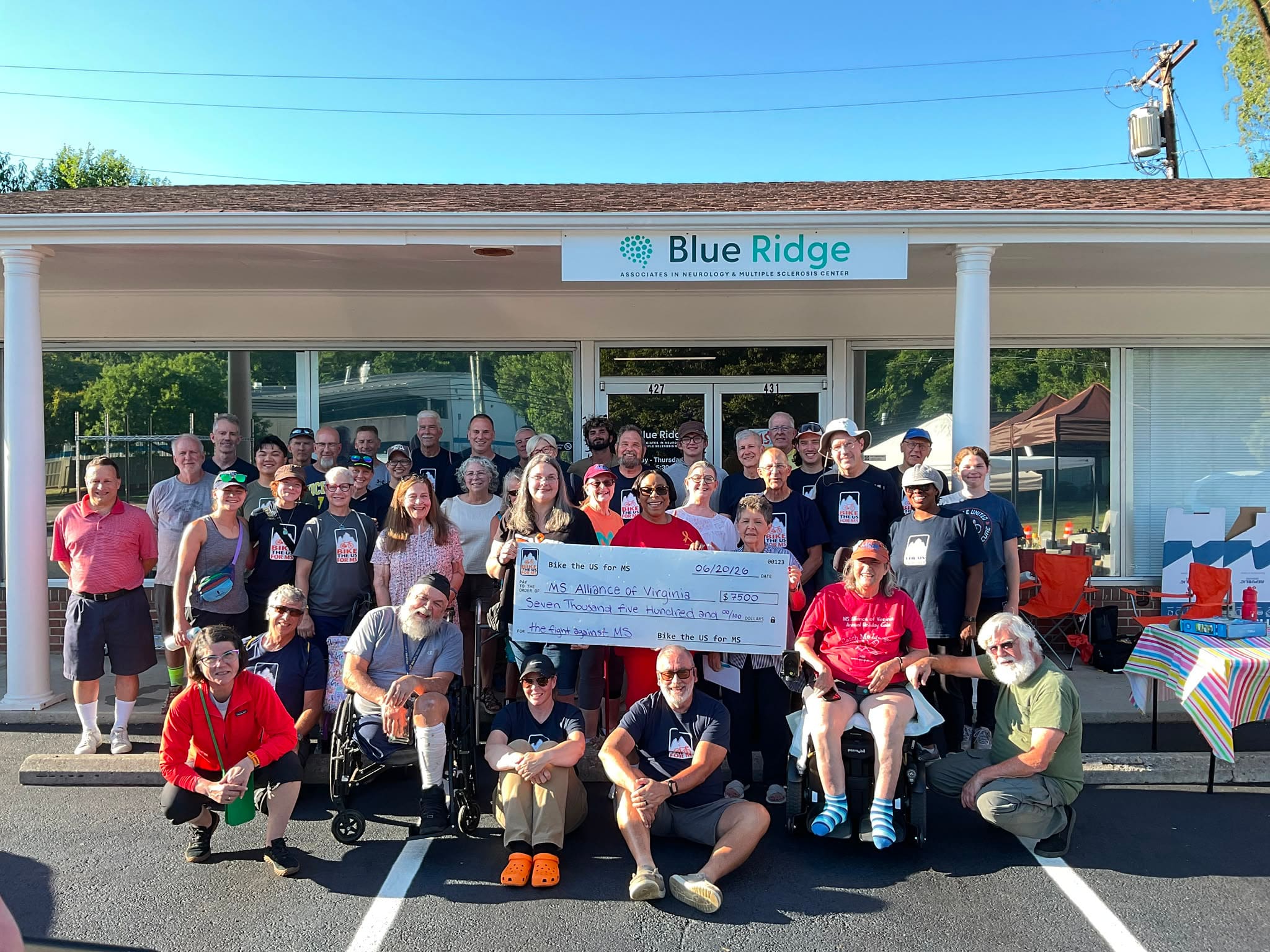
But I’ve been blessed in many ways along this journey through friendships, experiences and discoveries. I have also been able to work with so many of you to raise more than $20,000 to fight MS, an amount that ranks fifth among my teammates. As a group of 30 riders, we’ve raised more than $440,000, which is nearly double our original goal, and it is an all-time record amount for any Bike the US for MS tour.
So, thank you for giving and thank you for standing behind me and my bold dream. We may not have made it all the way to the Pacific, but we’ve learned a lot about what it’s like to cycle across America.
The Journey Continues
According to the National Multiple Sclerosis Society, MS is a chronic, autoimmune disease where the body’s immune system attacks the brain, spinal cord, and optic nerves. Common symptoms include fatigue, numbness, vision problems, weakness and pain, but impacts can grow much worse. People with advanced cases can experience diminished mobility, cognitive changes, speech problems, hearing loss, seizures and more.
MS is a terrifying disease, and I don’t know why I’ve been blessed to have avoided so many of its debilitating impacts. All I can do is take my medicine and try to pursue a lifestyle that includes proper nutrition, exercise and low stress. But that lifestyle took a dramatic turn on the TransAmerica Trail.
The trail is a beautiful adventure, full of golden moments and lasting memories, but it’s no picnic. Fatigue was a constant companion, and exhaustion was something everyone deals with. We covered an average of 65 miles per day, and with the exception of Kansas, we were in hills or mountains most of the time.
And when the day’s ride was done, the work began, starting with hauling gear from our support trailer. We set up tents or found floor space in churches, gymnasiums, or other shelters. We took turns using showers, and when an indoor shower wasn’t available, we set up a shower tent outside. And we were on constant lookout for laundromats as we moved from town to town.
We burned thousands of calories each day and replacing them was an ongoing struggle. The team shopped for food and kept storage compartments in our support van stocked with snacks to eat at rest stops. We had food cubbies in the trailer with meals to cook, and we were always looking for cafes, fast-food places, burger joints, pizza deliveries and beer bars with kitchens. I wasn’t particular about what I was eating because I was burning 4,000 to 6,000 calories per day. I ate everything I could get my hands on, and it still wasn’t enough. It’s normal to lose weight on the trail, and most of us did. I lost almost 15 pounds.
Each morning was a choreography. We had early risers and sleeper-inners. There were trade-offs for both sides. Under the rules, lights were not turned on until around 6:30, so 5:30 people did most of their morning packing and preparations in darkness. Meanwhile, those who slept in put up with the rustle of sleeping bags and stuff sacks, deflating air mattresses, bike shoes tapping across the floor and the clamber of breakfast. Soon, we all got to know each other’s habits, and just like a family, we coordinated, accommodated and in the end, we loaded up, aired up and were on our way long before the heat set in.
All my friends told me that leaving the group in Colorado was the right decision. First of all, they said no bike ride is worth jeopardizing your health over, but secondly, they said their two weeks of riding through the deserts of Utah and Nevada were full of beauty, but the riding was hot, hilly and monotonous.
According to campfire lore, there was a Bike the US for MS rider who got fed up years ago. He lost his mind in the Nevada desert, stole a support van and fled to Los Vegas. Eventually, police caught up with him and the van. The funny part is that the friend who told me the story sympathized with the poor guy. “There was no joy in the desert,” she said. “There was nothing good about that experience.”
Still, I consider missing out on the magnificence of Utah and Nevada a lost opportunity that I will always regret. But bicycle touring is a beautiful, messy adventure that doesn’t always go as planned. That’s certainly true in my case. Tours have a beginning and an end, but we can’t always control what happens in the middle. It’s just part of the journey.
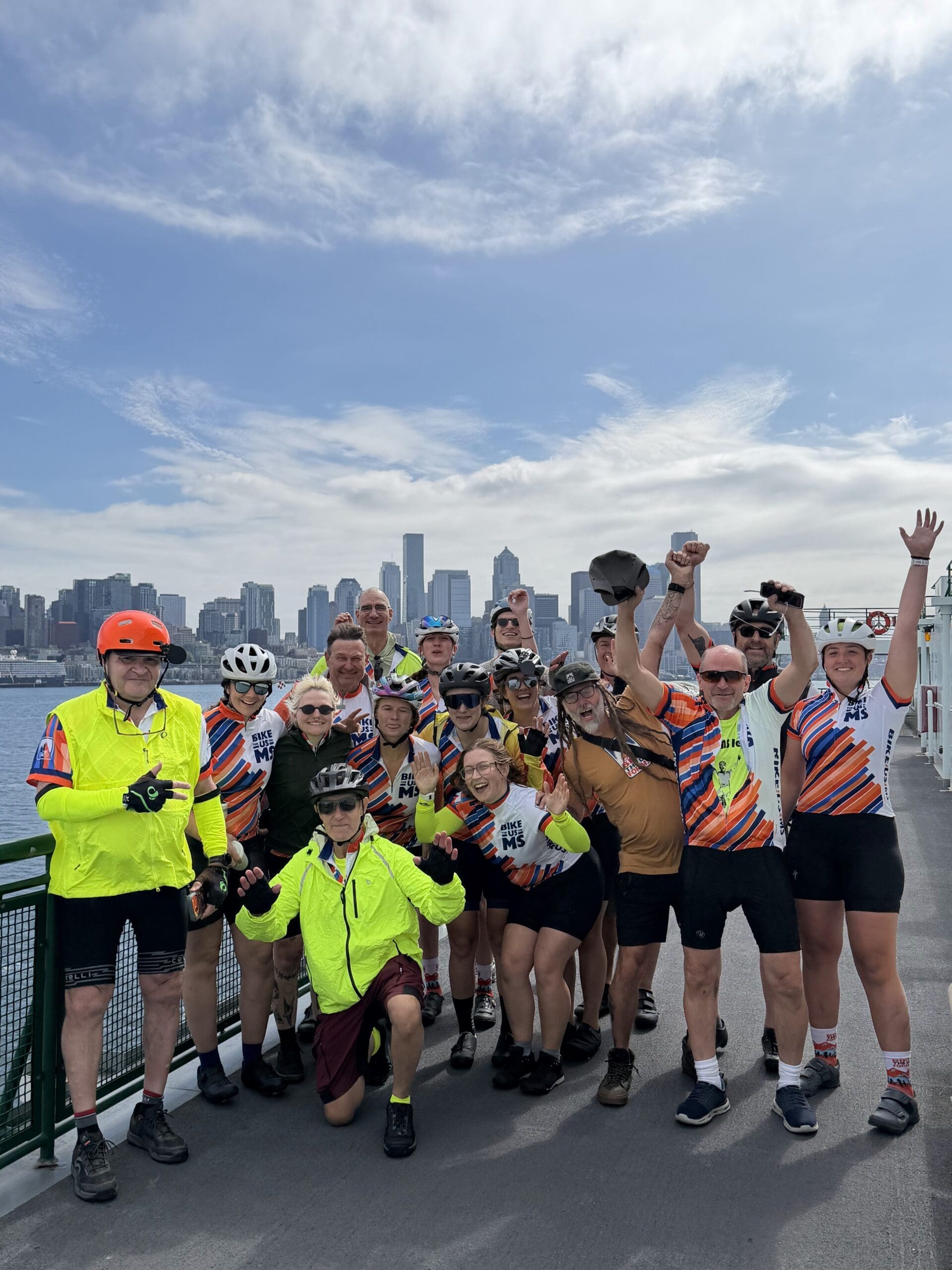
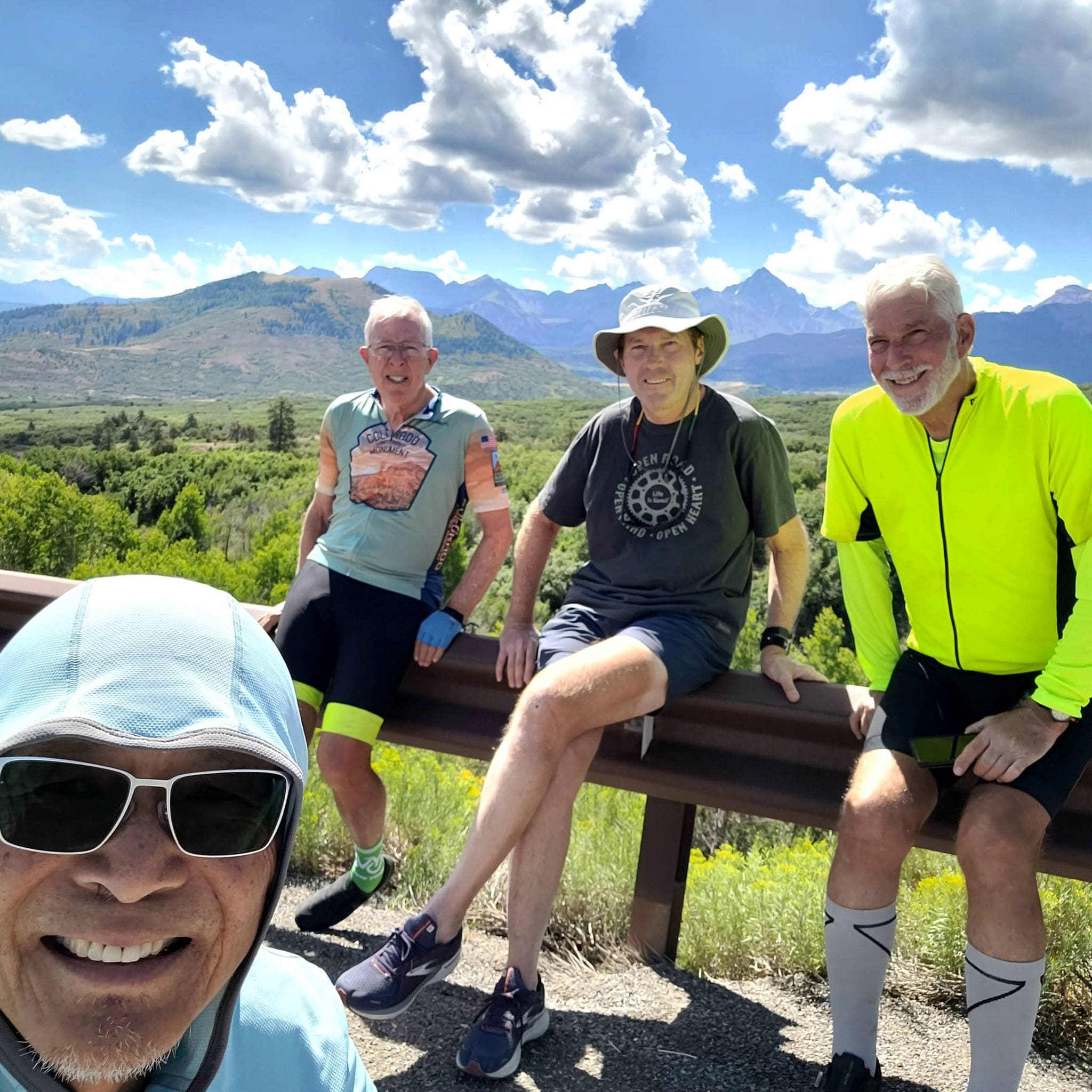
Fortunately, my TransAmerica adventure did not end in Colorado. After so many hard miles together, saying goodbye in Telluride was heartbreaking for everyone. Before my teammates rode away, we took one last group photo together, and promised that I would be back to celebrate with them in San Francisco. As it turned out, I arranged to borrow a bike from a local in Sacramento and join my friends in Winters, Calif. for one last ride.
We rode a 40-mile stretch through California farm roads, winding past ranches, vineyards, and finishing on bike paths and city streets through Vallejo to the San Francisco Bay. We rode a ferry across the water to the bustling shore of downtown San Francisco. The last five miles were a sight to see. Dressed in our team jerseys, we took an unforgettable route past restaurants and shops on the Embarcadero. And we rode amid heavy Monday afternoon traffic on Marina Boulevard to the sand and celebration on Crissy Field East Beach, a mile from the Golden Gate Bridge.
The day completed my journey of a lifetime, fulfilling a dream born on an OBS Grand Tour. Even though it didn’t turn out the way I had envisioned it as a 16-year-old, I accomplished what I set out to do as a 64-year-old. I learned some things, I proved some things and I was reminded of some things. And in the end, that’s what journeys are all about.
Chip Minty is a retired journalist from Norman, and a 50-year veteran of cycling. A member of the Oklahoma Bicycle Society and the Bicycle Leage of Norman, Minty has completed a dozen cross-country bicycle tours, including five OBS Grand Tours, one of which he directed. In addition to countless club rides, he has competed in sanctioned bicycle races, triathlons and ultra-marathon cycling events, winning the OBS’s 1987 Ironbutt 24-Hour Marathon event at Lake Stanley Draper, finishing with 400 miles.